If you’ve ever felt like your medical practice is doing everything right seeing patients, providing top tier care, and documenting every detail only to find your bank account isn’t reflecting that hard work, you aren’t alone. In the world of healthcare, there is a silent thief that often sneaks into the revenue cycle: the dirty claim.
But what if there was a gold standard that guaranteed a smoother path to reimbursement? That’s where the clean claim comes in.
What Is a Clean Claim?
In medical billing, a clean claim is a health insurance claim that is submitted with complete, accurate, and compliant information, allowing it to be processed and paid on the first submission.
Think of it as a perfect application. There are no typos, no missing signatures, and no gray areas for the insurance company to question. When a claim is clean, the payer (like Blue Cross, Aetna, or Medicare) can look at it and say, “Yep, everything is here,” and hit the pay button without needing to ask you for more information.
At GoSourceMD, we call this the First-Pass Acceptance. It’s the goal of every high-performing billing department because it means the difference between getting paid in 14 days or waiting 60+ days while fighting a denial.
Why Clean Claims Matter More Than You Think?
You might be thinking Does it really matter if it’s clean the first time? Can’t we just fix it later?
Sure, you can fix a rejected claim. But it costs you. A lot.
Industry data shows that it costs a practice an average of $25 to $45 to rework a single denied claim. When you factor in the administrative time spent on phone calls, resubmissions, and appeals, that’s money coming directly out of your profit margin.
Here is why aiming for 100% clean claims is essential:
-
Faster Cash Flow:
Clean claims are typically paid within the standard 15-45 day window.
-
Reduced Administrative Stress:
Your staff can focus on patients instead of chasing insurance companies.
-
Predictable Revenue:
When your Clean Claim Rate (CCR) is high, you can actually forecast your practice’s income for the next quarter.
-
Better Patient Experience:
Patients hate getting surprise bills months later because a claim was initially denied for a technical error. Clean claims prevent those awkward conversations.
The Anatomy of a Clean Claim: What’s Inside?
For a claim to be considered clean, it must pass through a gauntlet of requirements. If even one field is off, it becomes a dirty claim. Here are the essential components:
-
Accurate Patient Demographics
It sounds simple, but a misspelled middle name or an incorrect date of birth is one of the top reasons claims get kicked back. A clean claim has the patient’s name exactly as it appears on their insurance card.
-
Valid Provider Information
This includes your NPI (National Provider Identifier), tax ID, and practice address. If you’ve recently moved or added a new provider and haven’t updated your credentials, your claims will stop being clean immediately.
-
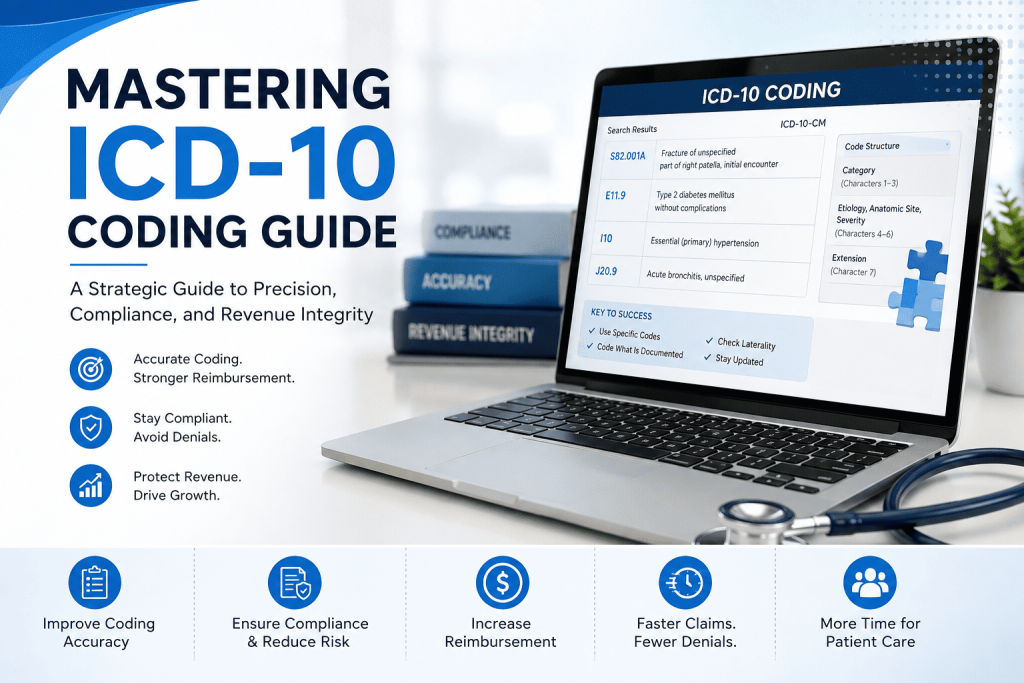
Precise Medical Coding (ICD-10 & CPT)
This is where the magic happens. You need the right ICD-10 code to match the CPT/HCPCS code. If you bill for a high-level office visit but the diagnosis is a minor scratch, the payer’s logic engine will flag it as a mismatch.
-
Supporting Modifiers
Sometimes a procedure needs a tag to explain it further like a modifier -25 for a separate service on the same day. Using these correctly is the hallmark of a clean claim.
-
Timely Filing
Every payer has a clock. If you submit a perfect claim but you’re one day past their deadline, it’s no longer a clean claim it’s a denied one.
Clean Claims vs. Dirty Claims: Spotting the Difference
To really understand what is a clean claim?
it helps to look at its opposite.
Feature |
✓ Clean Claim |
✕ Dirty Claim |
|---|---|---|
| Accuracy | 100% error-free | Missing information or typos |
| Processing | Automated, “First-Pass” | Manual review or immediate rejection |
| Timeline | Paid in 2–4 weeks | Delayed by weeks or months |
| Cost | Minimal administrative cost | High rework cost ($25–$45+) |
A Dirty ClaimA Dirty Claim contains errors that cause it to be rejected by the clearinghouse or the payer. Common culprits include expired insurance, missing authorization numbers, or duplicate billing.
What Is a Good Clean Claim Rate (CCR)?
The Clean Claim Rate is a metric that tells you what percentage of your claims are accepted on the first try.
- 98% or higher: This is the industry Gold Standard. It means your billing process is highly efficient.
- 90% to 95%: This is the average for a healthy practice, but there is still room for improvement.
- Below 85%: This is a red flag. If 15% of your claims are being rejected, you are bleeding revenue through administrative waste.
At GoSourceMD, we use a proprietary AI Audit System to catch these errors before they leave our hands, ensuring our partners stay in that 98%+ sweet spot.
How GoSourceMD Helps You Achieve Clean Claim Mastery?
Achieving a high clean claim rate isn’t just about being careful it’s about having the right systems in place. At GoSourceMD, we specialize in transforming messy billing cycles into streamlined revenue engines.
We Use Technology-Driven Scrubbing
Before we send a claim to the payer, it goes through a claim scrubber. This software checks for thousands of potential errors from mismatched codes to missing modifiers instantly.
Specialty-Specific Expertise
A clean claim for an Orthopedic surgeon looks very different from one for an OB-GYN. Our Board-Certified specialty coders understand the unique nuances of your field, ensuring documentation matches payer specific rules.
Proactive Denial Management
If a claim does get rejected, we don’t just fix it. we perform a root cause analysis. If we see that a specific front desk error is causing dirty claims, we help you fix the process at the source.
Tree Quick Tips to Improve Your Practice’s Clean Claim Rate Today
- Verify Eligibility Every Time: Don’t assume a patient’s insurance is the same as it was last month. Run an eligibility check at the time of check-in.
- Audit Your Common Codes: Look at your top 10 most used codes. Are they still current? Have payer policies changed regarding their use?
- Partner with the Experts: If your team is overwhelmed by the complexity of modern billing, it might be time to outsource. A partner like GoSourceMD ensures your claims are clean, compliant, and paid fast.
Final Thoughts: The Clean Claim Advantage
Understanding What is a clean claim? is the first step toward taking control of your practice’s financial future. It’s about more than just paperwork; it’s about ensuring that the care you provide is reflected in the reimbursement you receive.
Stop settling for delayed payments and high denial rates. You’ve done the work now let’s make sure you get paid for it.
Want to know your practice’s Clean Claim Rate?
Connect with our team at www.gosourcemd.com to request a personalized Revenue Cycle Health Check and take the first step toward optimizing your practice’s financial health.
FAQ: Mastering the Clean Claim Cycle
1. How does my Clean Claim Rate (CCR) directly impact my practice’s monthly cash flow and overhead?
Your Clean Claim Rate (CCR) is a key driver of your Days in AR (Accounts Receivable). A high clean claim rate helps ensure that the majority of your revenue is collected within 14–30 days. When a claim is dirty, it triggers a manual intervention process that can cost an average of $25–$45 per claim in administrative labor. High rejection rates effectively increase your overhead because your staff may have to do the same work twice, while your cash remains tied up in the payer’s adjudication process.
2. Why does my EMR/PMS flag a claim as Clean but I still receive a rejection from the payer?
This is a common frustration. Most EMR/PMS claim scrubbers primarily check technical data integrity, such as whether a ZIP code contains five digits. They may not identify payer-specific logic or clinical necessity requirements. A truly clean claim must meet the specific medical policies and billing rules of the individual payer. GoSourceMD combines technology with human expertise and specialty-specific claim scrubbing to help identify payer requirements that automated systems may miss.
3. What are the most common silent errors that prevent a claim from being clean?
Beyond simple typos, several less obvious issues can prevent a claim from being clean, including:
- Coordination of Benefits (COB) issues: The patient has secondary insurance that was not updated during check-in.
- Eligibility expiration: The policy was active last month but terminated at the beginning of the current month.
- Modifier mismatches: A -25 or -59 modifier is used in a way that does not align with Correct Coding Initiative (CCI) edits.
- Credentialing gaps: A new provider begins seeing patients before their NPI is fully linked to the practice’s tax ID for a specific payer.
4. How can I distinguish between a “Rejected” claim and a “Denied” claim?
This is an important distinction for your billing team.
- A Rejection: Happens at the clearinghouse or payer’s front door. The claim does not enter the payer’s adjudication system because it contains an issue that prevents processing. Rejected claims generally do not appear on an EOB (Explanation of Benefits).
- A Denial: Occurs after a claim has been accepted and processed by the payer but payment is refused during adjudication, often because of medical necessity, coverage limitations, coding issues, or other payer policies.
High rejection rates can indicate that your front-end clean claim process needs immediate attention.
5. What is the ROI on outsourcing to a billing service to improve my clean claim rate?
The ROI can come from two primary areas: recovered revenue and reduced labor costs. For example, if a practice processes 500 claims per month and improves its clean claim rate from 85% to 98%, approximately 65 fewer claims would require rework. At a $30 rework cost per claim, that represents approximately $1,950 per month in potential staff-time savings alone. The practice may also benefit from faster reimbursement and improved cash flow when claims are processed correctly the first time.
6. Can AI and automation actually guarantee a 100% Clean Claim Rate?
No system can honestly guarantee a 100% clean claim rate because payer rules, policies, and requirements can change without warning. However, technology and automation can significantly improve claim accuracy. GoSourceMD leverages adaptive learning technology to help identify and respond to changing payer requirements across providers. This combination of technology and expertise supports a 98%+ Clean Claim Rate and helps practices minimize preventable claim issues.