Imagine for a moment that you are filling a large bucket with water. You’re working hard, pumping the handle, and watching the water flow in. But no matter how fast you pump, the bucket never seems to get full. You look closer and realize the bottom is peppered with tiny, almost invisible pinholes. The water is escaping just as fast as you’re putting it in.
In the medical world, this is exactly what revenue leakage in healthcare looks like.
You and your team are seeing patients, providing top notch care, and documenting every visit. From the outside, the practice looks busy and successful. But when you look at the financial statements, the numbers don’t match the effort. Somewhere between the patient walking through the front door and the final payment hitting your bank account, money is disappearing.
Today, we’re going to talk about why this happens, where those pinholes are located, and how you can plug them to ensure your practice stays financially healthy.
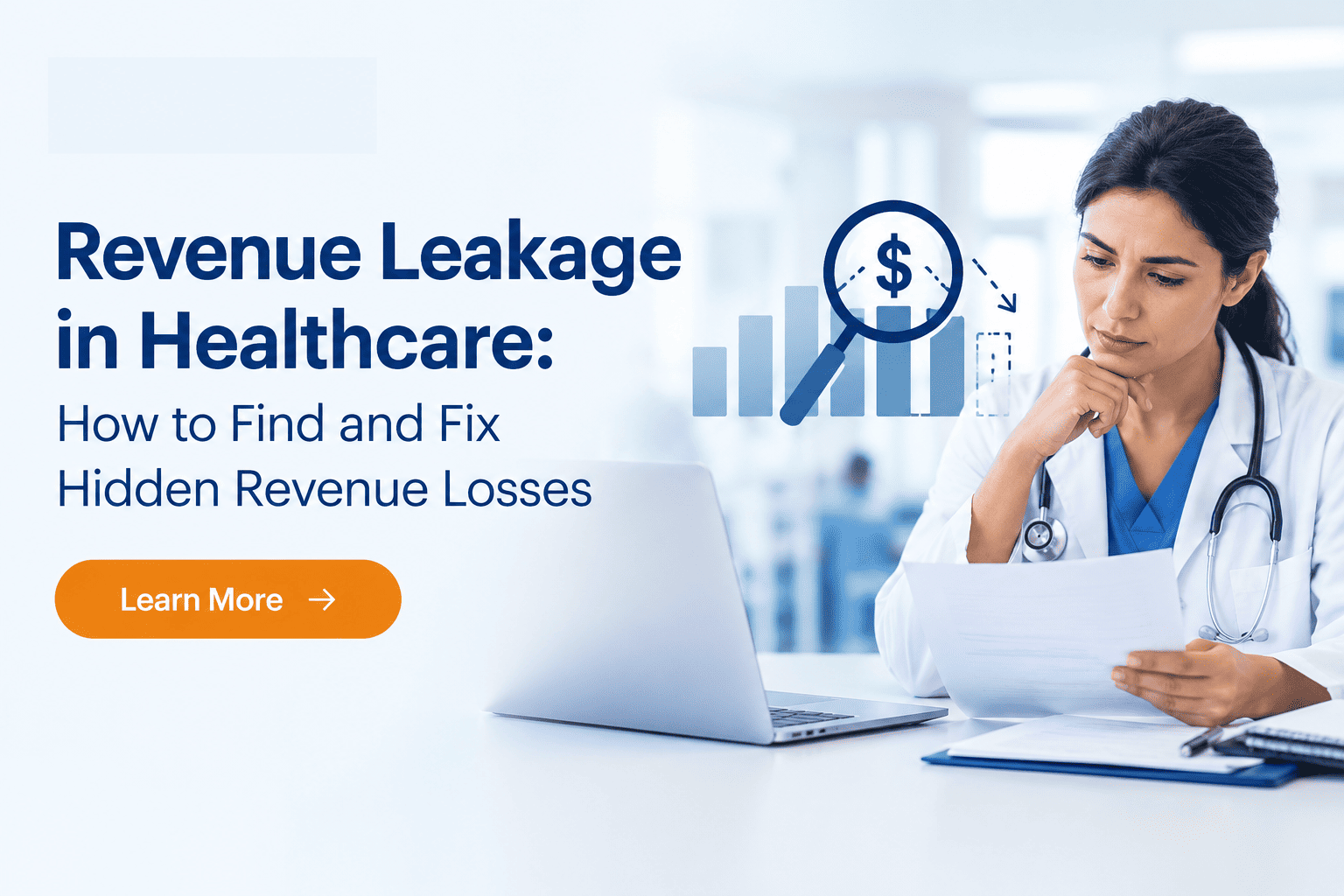
What Exactly is Revenue Leakage?
Revenue leakage is the lost opportunity to collect money that you have rightfully earned. It isn’t about a lack of patients; it’s about the breakdown of the systems meant to capture the value of the services you provided.
It’s often called a silent killer because it doesn’t happen all at once. It’s not a giant theft; it’s a dollar here, fifty dollars there, and a denied $500 claim that someone forgot to appeal. Over a year, these small losses can account for 5% to 15% of a practice’s total potential revenue.
Where is the Money Going?
To fix the leak, you first have to find it. In healthcare, revenue leakage usually happens in one of three stages: the front end (before the patient is seen), the mid-cycle (during documentation and coding), and the back end (billing and collections).
1. The Front-End Fumbles
Believe it or not, a huge chunk of revenue leakage starts at the front desk before the doctor even says hello to the patient.
- Insurance Eligibility: If a staff member forgets to verify insurance or doesn’t notice that a policy has expired, the claim is doomed before it’s even sent.
- Inaccurate Data Entry: A simple typo in a patient’s ID number or a misspelled name can lead to an instant rejection.
- Failure to Collect Co-pays: It’s much harder to collect $20 after the patient leaves the building. If your front desk isn’t asking for payments upfront, you’re essentially leaving money on the table.
2. The Mid-Cycle Mismatches
This is where the clinical work meets the paperwork. If the communication here isn’t perfect, money leaks out.
- Under coding: Sometimes, providers choose a lower-level code because they are afraid of being audited. This is called defensive coding and it costs practices thousands of dollars in earned revenue.
- Missing Charges: Did you perform a quick lab test or an extra procedure during the visit? If it’s not documented and coded, it’s like it never happened at least in the eyes of the payer.
- Poor Documentation: If the doctor’s notes don’t clearly support the complexity of the visit, the insurance company has every right to downcode the claim or deny it entirely.
3. The Back-End Bottlenecks
This is the final stage, and it’s often where the most significant leakage occurs because of neglect.
- Unworked Denials: Did you know that a staggering percentage of denied claims are never resubmitted? Many practices simply see a denial and write it off because the staff doesn’t have the time to investigate and appeal it.
- Slow Follow-ups: The longer a claim sits unpaid, the less likely you are to ever see that money. Timely filing limits are real, and missing them is like throwing a check in the trash.
- Patient Balance Neglect: As high-deductible health plans become the norm, more of your revenue comes directly from patients. If you don’t have a solid system for billing patients and following up on those invoices, that money evaporates.
Why Should You Care?
It’s easy to feel like focusing on revenue is a bit cold when your primary goal is patient care. But here’s the reality: A healthy bottom line is what allows you to provide great care.
When revenue leakage goes unchecked, the stress on the practice increases. You might not be able to afford the latest medical technology. You might struggle to give your hardworking staff the raises they deserve. You might even find yourself burnt out, feeling like you’re working harder than ever for less reward.
Stopping revenue leakage isn’t about being greedy; it’s about sustainability. It’s about making sure your practice is strong enough to serve your community for years to come.
How to Start Plugging the Leaks?
The good news is that revenue leakage is a solvable problem. It requires a mix of better processes, smarter technology, and a shift in mindset.
Conduct a Regular Financial Health Check
You wouldn’t treat a patient without running tests, right? The same applies to your business. Regularly audit your claims. Look at your Clean Claim Rate the percentage of claims that are paid on the first submission. If it’s below 95%, you have a leak.
Invest in Staff Training
Your front desk team and your billers are your first line of defense. Make sure they understand how vital their roles are. A simple training session on how to read an insurance card or how to use a specific modifier can pay for itself in a single week.
Accept Automation
We live in the digital age. If your team is manually checking insurance eligibility for every patient, they are wasting time and prone to human error. Use software that automates these checks and flags potential errors before the claim is sent.
Don’t Let Denials Die
Create a zero-tolerance policy for unworked denials. Every single rejection should be reviewed, corrected, and sent back out. This is often where the found money lives.
The Bottom Line
Revenue leakage in healthcare is a complex challenge, but it doesn’t have to be your reality. By paying attention to the small details from the moment a patient calls for an appointment to the moment the final payment is posted you can ensure that your practice remains financially robust.
Remember, you aren’t just running a business you are managing a vital community resource. Every dollar you recover from a leak is a dollar that can be reinvested into better patient outcomes, better equipment, and a better work environment for your team.
Don’t let your hard work slip through the cracks. Start looking for those pinholes today and give your practice the financial security it deserves.
Stop the drain and secure your practice’s future.
At GoSourceMD, we specialize in identifying these hidden gaps and streamlining your revenue cycle. We handle the complexities of billing, coding, and denial management so you can focus on what you do best: caring for your patients.
Ready to see the difference a watertight revenue cycle can make?
“Efficiency is the bridge between a hardworking practice and a thriving one.”
Plugging the Gaps: Your Top Questions on Revenue Leakage Answered
1. What exactly constitutes Revenue Leakage in my practice?
Think of revenue leakage as any earned income that fails to reach your bank account due to process errors. It’s not just lost money; it’s the gap between the value of the services you provided and the actual reimbursement you collected. This includes everything from unbilled procedures and uncollected co-pays to denied claims that were never appealed.
2. Why is revenue leakage in healthcare becoming a bigger problem now?
The complexity of the healthcare ecosystem is at an all-time high. Between the shift toward high-deductible health plans (HDHPs), which puts more financial responsibility on the patient, and the constantly changing payer rules and ICD-10 coding updates, there are simply more entry points for error than there were a decade ago. If your systems haven’t evolved as fast as the regulations, you’re likely leaking revenue.
3. How can I tell if my practice is suffering from significant leakage?
There are a few red flag KPIs (Key Performance Indicators) you should monitor:
- Clean Claim Rate (CCR): If this is below 95%, you are losing money on administrative rework.
- Days in AR (Accounts Receivable): If your average is climbing above 40 days, your cash flow is leaking.
- Denial Rate: A healthy practice should see a denial rate of less than 5%. Anything higher indicates a systemic leak in your front-end or coding processes.
4. Is the leakage happening at the front desk or in the billing department?
Usually, it’s both. However, industry data suggests that up to 60% of denials originate from front-end errors, such as incorrect insurance verification or patient registration typos. The billing department leaks revenue when they fail to follow up on those denials or miss timely filing deadlines. It is a full-cycle issue.
5. We have an EHR/Billing software; shouldn’t that stop the leaks?
Software is a tool, not a cure. While many EHRs have built-in scrubbers to catch errors, they are only as good as the data entered into them. If your staff isn’t trained to interpret the alerts or if the software isn’t updated with the latest payer rules, the leaks will simply happen digitally. Automation helps, but it requires expert oversight.
6. How does under-coding contribute to revenue leakage?
Many CEOs don’t realize that playing it too safe is a form of leakage. To avoid audits, some providers consistently code for lower-level visits than what was actually performed. This is defensive coding and it results in thousands of dollars in legitimate, earned revenue being left on the table every year.
7. What is the cost of collection and how does it relate to leakage?
This is a critical CEO metric. If it costs your staff $25 in labor and time to chase down a $30 denied claim, you’ve essentially leaked that revenue anyway. True revenue integrity means capturing the payment correctly the first time so you aren’t spending your profits just trying to collect what you’re owed.
8. Can outsourcing my RCM really plug these leaks?
For many founders, the answer is yes. A dedicated Revenue Cycle Management (RCM) partner brings specialized expertise and technology that a busy clinical staff simply can’t match. By focusing solely on clean claims and aggressive denial management, a partner often recovers more than enough leaked revenue to pay for their own services, turning a cost center into a profit center.