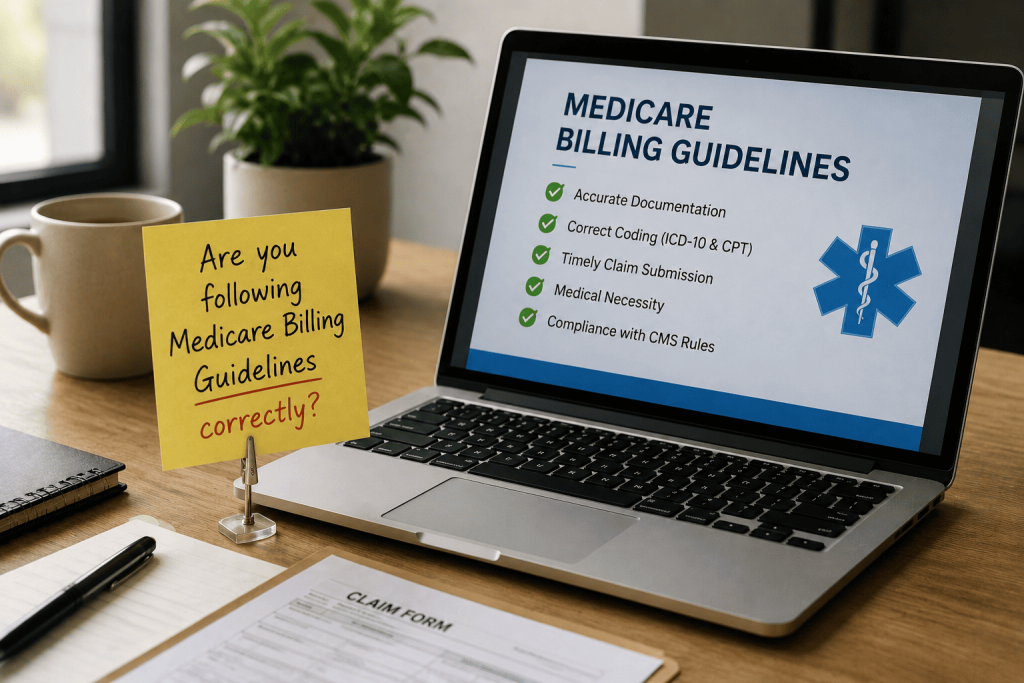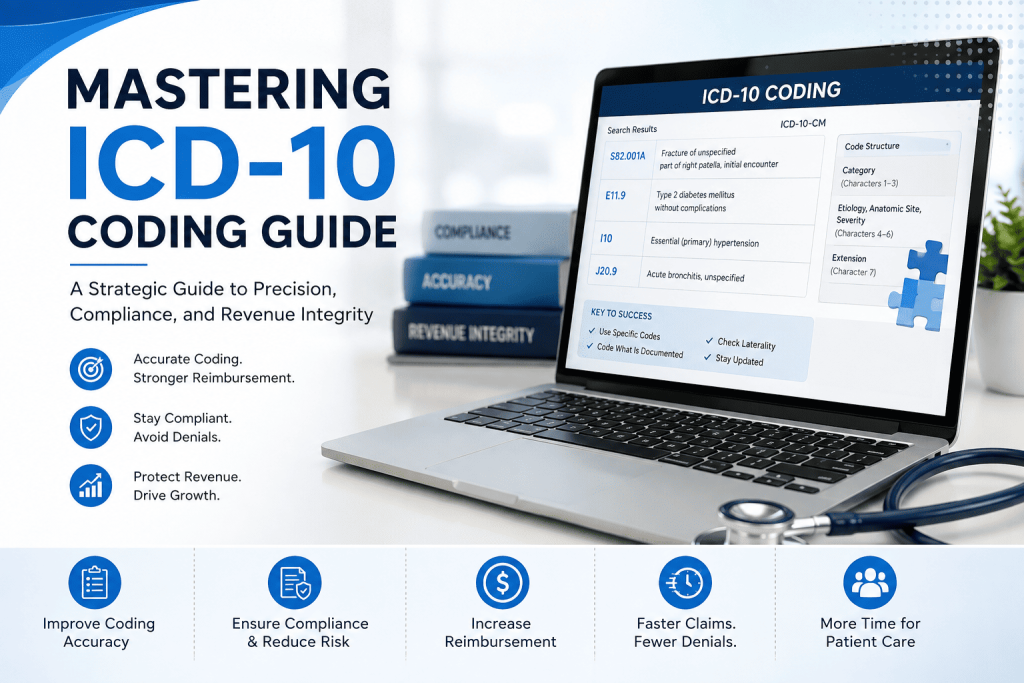
Every patient has a unique health history. Some manage one medical condition, while others live with multiple chronic illnesses that require ongoing treatment, regular monitoring, and coordinated care.
But are all these conditions being properly documented and captured in the patient’s medical record?
This is where HCC Coding and Risk Adjustment become important.
For healthcare providers, accurate HCC coding is about more than assigning diagnosis codes. It connects a patient’s documented health conditions with the risk adjustment process used by healthcare programs, particularly Medicare Advantage. Complete and accurate documentation helps ensure that the patient’s health status is represented appropriately.
Let’s look at how HCC coding works, why it matters, and what your organization can do to improve documentation and coding accuracy.
What Is HCC Coding?
HCC stands for Hierarchical Condition Category. It is a classification system used in risk adjustment models to group certain medical conditions based on their expected healthcare costs.
HCC coding helps represent the health needs of a patient using documented diagnoses.
For example, consider two patients of the same age. One may have no major chronic conditions, while the other may be managing diabetes, chronic kidney disease, and heart failure. Their healthcare needs may be very different.
Risk adjustment models use patient information, including qualifying diagnosis codes, to estimate expected healthcare costs. HCC categories help account for differences in patient health status.
However, not every diagnosis automatically qualifies for an HCC. The diagnosis must meet the applicable model’s requirements and be supported by appropriate medical record documentation.
What Is Risk Adjustment in Healthcare?
Risk adjustment is a process used to account for differences in the health status and expected healthcare needs of patient populations.
It is particularly important in Medicare Advantage, where risk adjustment helps determine payments to health plans based on the health conditions of their enrolled members.
Think about it this way: A healthcare organization caring for patients with multiple chronic conditions may have different care needs and resource requirements than one serving a generally healthier population.
Risk adjustment helps account for these differences when calculating expected costs.
For healthcare providers, accurate documentation and coding play an important role in ensuring that the patient’s documented health conditions are represented correctly in the information used by applicable risk adjustment programs.
Why Are HCC Coding and Risk Adjustment Important for Healthcare Providers?
HCC Coding and Risk Adjustment matter because incomplete or inaccurate diagnosis information can create gaps between a patient’s actual health condition and what is reflected in their medical records.
Here are some important reasons healthcare organizations should pay attention to this process.
1. Accurate Representation of Patient Health
A patient’s medical record should reflect their current health conditions and the care being provided.
When chronic conditions are not properly documented or coded, the patient’s health profile may not be fully represented in risk adjustment data.
Accurate coding helps connect documented clinical information with the appropriate diagnosis categories.
2. Better Support for Risk Adjustment Accuracy
Risk adjustment depends on reliable diagnosis information.
When eligible conditions are documented and coded correctly, healthcare organizations can support more accurate patient risk profiles. This is important for health plans that use risk adjustment data to calculate payments under applicable programs.
3. Stronger Medical Record Documentation
HCC coding encourages healthcare teams to pay close attention to the quality and completeness of clinical documentation.
A diagnosis should not simply remain on a problem list without appropriate clinical support. The medical record should explain the patient’s condition and demonstrate that it was assessed, monitored, evaluated, or treated as required by the applicable coding and program guidelines.
4. Better Coding Compliance
Incorrect coding can lead to unsupported diagnosis submissions, audit findings, and potential payment adjustments.
A consistent review process helps identify documentation gaps, coding inconsistencies, and conditions that need clarification before submission.
5. More Organized Care Documentation
When patient conditions are reviewed and documented consistently, healthcare teams can maintain a clearer picture of ongoing health needs.
This supports better continuity of information between providers, care teams, and other authorized stakeholders.
How Does the HCC Coding and Risk Adjustment Process Work?
The process involves more than selecting a diagnosis code. It requires reviewing clinical documentation, confirming the diagnosis, applying the appropriate coding rules, and checking whether the diagnosis maps to an eligible HCC under the relevant model.
Here is a simplified look at the process.
Step 1: Review the Patient’s Medical Records
The process begins with reviewing relevant patient records, including physician notes, specialist reports, test results, treatment history, and other supporting documentation.
The purpose is to understand the patient’s documented health conditions and the care provided during the encounter.
Step 2: Identify Documented Diagnoses
The coding team identifies diagnoses that are supported by the provider’s documentation.
Conditions should not be added based only on assumptions, old problem lists, or information that does not meet applicable reporting requirements.
If clarification is needed, the appropriate provider query process should be followed.
Step 3: Assign the Appropriate ICD-10-CM Codes
Once the diagnosis is established, the coder reviews the applicable ICD-10-CM guidelines, code descriptions, and documentation requirements to assign the correct code.
Code selection should reflect the documented condition, not an attempt to reach a particular risk score.
Step 4: Check HCC Mapping
The assigned diagnosis code is then reviewed against the applicable risk adjustment model and payment year.
Not every ICD-10-CM diagnosis maps to an HCC. The mapping can also vary depending on the model and year being used.
Step 5: Review Documentation and Coding Accuracy
Before the data is submitted through the applicable process, the records should be checked for completeness, consistency, and coding accuracy.
This includes confirming that the diagnosis is supported, the documentation meets applicable requirements, and the correct model-year mapping has been applied.
Step 6: Maintain Records for Future Review
Healthcare organizations should maintain complete and accessible medical records in accordance with applicable retention requirements.
Proper documentation supports internal audits, external reviews, and requests for medical record validation.
Common HCC Coding and Risk Adjustment Challenges
Even experienced healthcare organizations can face challenges when managing HCC coding. High patient volumes, limited documentation time, and changing coding requirements can make the process difficult to manage consistently.
Here are some common issues to watch for.
Incomplete Clinical Documentation
A provider may know that a patient has a chronic condition, but the medical record may not contain enough detail to support the diagnosis for coding purposes.
For example, a condition may appear on the patient’s problem list without being addressed during the encounter. This can create questions about whether it meets the applicable reporting requirements.
Missing Chronic Condition Updates
Chronic conditions often require ongoing assessment and documentation.
If the patient’s current clinical status is not reviewed and recorded appropriately, the medical record may not accurately reflect the care provided during the reporting period.
Incorrect ICD-10-CM Code Selection
Selecting a code that does not accurately match the documented diagnosis can affect HCC mapping and create compliance concerns.
Coders must review the latest applicable coding guidelines and ensure that the selected code is supported by the medical record.
Overlooking Supporting Documentation
A diagnosis may require additional clinical details to establish its severity, relationship to another condition, or current status.
Without the required supporting information, a diagnosis may not pass a validation review.
Changing Coding and Risk Adjustment Requirements
Risk adjustment models, diagnosis mappings, and coding guidance can change over time.
Healthcare organizations need a process to keep coding teams informed and ensure they are using the correct requirements for the applicable reporting and payment year.
What Documentation Is Needed for Accurate HCC Coding?
Good HCC coding begins with good clinical documentation.
The exact requirements depend on the condition, coding guidelines, payer rules, and applicable risk adjustment program. However, healthcare organizations should pay attention to the following areas:
- Clear diagnosis: The provider’s documentation should clearly identify the condition being reported.
- Current clinical information: Records should reflect the patient’s condition during the relevant encounter and reporting period.
- Assessment and treatment: Documentation should show how the condition was evaluated, monitored, or treated when required.
- Supporting clinical details: Relevant findings, specialist notes, and other supporting information should be available when needed.
- Provider authentication: Medical records should meet applicable signature and credential requirements.
- Consistent documentation: Information across the medical record should be accurate and should not contain unresolved contradictions.
Remember, a diagnosis code alone does not replace the clinical documentation needed to support it.
How Can Healthcare Organizations Improve HCC Coding Accuracy?
Improving HCC coding does not always require a complete change to your existing workflow. In many cases, a more consistent review and documentation process can make a meaningful difference.
Here are some practical steps to consider.
Build a Consistent Documentation Workflow
Make sure providers understand what information should be documented when evaluating chronic conditions. Clear documentation practices can reduce repeated clarification requests and coding delays.
Conduct Regular Coding Reviews
Review a sample of coded records to identify recurring issues, missing documentation, and coding inconsistencies. Use the findings to improve internal processes.
Keep Coding Teams Updated
Ensure coders have access to current ICD-10-CM guidelines, applicable HCC model mappings, and relevant payer requirements.
Improve Communication Between Providers and Coders
A strong communication process helps coders clarify incomplete or conflicting documentation through appropriate channels.
Use Technology Carefully
Electronic health records and coding tools can support documentation review and identify potential gaps. However, technology should support qualified human review rather than replace clinical judgment or coding validation.
Monitor Quality, Not Just Volume
Tracking the number of records coded is useful, but it does not tell the whole story.
Healthcare organizations should also monitor coding accuracy, documentation completeness, query patterns, audit findings, and turnaround times.
How GoSourceMD Supports HCC Coding and Risk Adjustment?
Managing clinical documentation and coding requirements alongside daily patient care can be challenging. Your team needs time to focus on patients, but your records and revenue cycle workflows also need consistent attention.
That’s where GoSourceMD can support your operations.
We provide healthcare revenue cycle management and medical coding support designed around the needs of healthcare organizations. Our approach focuses on accurate documentation, consistent processes, and dependable operational support.
Medical Coding Support: Support for accurate ICD-10-CM coding based on provider documentation and applicable coding guidelines.
Documentation Review: Review of medical records to identify missing information, inconsistencies, and potential documentation gaps that may require clarification.
Coding Quality Checks: Review processes designed to identify coding discrepancies and support more consistent coding outcomes.
Denial and A/R Management: Support with denial follow-up, accounts receivable workflows, and related revenue cycle activities.
Reporting and Operational Support: Reporting and workflow visibility to help healthcare organizations monitor process performance and identify areas for improvement.
For HCC-related work, the focus remains on accurate, supported diagnosis reporting. We do not encourage adding unsupported diagnoses or changing clinical documentation to influence risk scores. Clinical decisions and final diagnosis determinations remain with the qualified healthcare provider.
Our goal is to help your team maintain organized workflows while keeping accuracy and compliance in focus.
Keep Your Coding and Documentation Workflows on Track
Accurate HCC Coding and Risk Adjustment start with complete clinical documentation and a consistent coding process. When healthcare teams have clear workflows and dependable operational support, they can spend less time managing avoidable documentation issues and more time focusing on patient care.
At GoSourceMD, we understand the importance of getting the details right. We work with healthcare organizations to support their medical coding and revenue cycle operations with accuracy, consistency, and care.
Frequently Asked Questions About HCC Coding and Risk Adjustment
1. Why is HCC Coding and Risk Adjustment important for healthcare providers?
HCC Coding and Risk Adjustment help ensure that eligible patient conditions are accurately represented in medical records and risk adjustment data. Proper coding and documentation support accurate patient risk profiles, regulatory compliance, and appropriate reimbursement processes.
2. What are the most common HCC coding errors?
Common HCC coding errors include incomplete clinical documentation, missing chronic condition updates, incorrect ICD-10-CM code selection, unsupported diagnosis reporting, missing clinical evidence, and outdated HCC mappings. These errors can affect coding accuracy and create compliance concerns.
3. What documentation is required for accurate HCC coding?
Accurate HCC coding requires clear diagnosis documentation, current clinical information, relevant assessment and treatment details, supporting medical records, and appropriate provider authentication. Documentation must meet the requirements of applicable coding guidelines and risk adjustment programs.
4. How does incomplete clinical documentation affect risk adjustment accuracy?
Incomplete documentation can prevent eligible medical conditions from being accurately represented in a patient’s risk profile. When diagnoses lack sufficient clinical support or are not appropriately addressed during an encounter, they may not qualify for reporting under applicable requirements.
5. How can healthcare providers improve HCC coding accuracy?
Healthcare providers can improve HCC coding accuracy by establishing consistent documentation workflows, conducting regular coding audits, reviewing chronic conditions, updating coding guidelines, and improving communication between providers and coding teams.
6. What is the relationship between ICD-10-CM codes and HCC categories?
ICD-10-CM codes identify specific medical diagnoses, while HCC categories group certain diagnoses within risk adjustment models. Not every ICD-10-CM code maps to an HCC. The mapping depends on the applicable risk adjustment model and payment year.
7. What should healthcare providers look for in an HCC coding service provider?
Healthcare providers should evaluate a service provider’s ICD-10-CM coding expertise, understanding of HCC models, documentation review processes, quality assurance procedures, compliance knowledge, data security practices, and ability to support existing revenue cycle management workflows.
8. How can GoSourceMD support HCC Coding and Risk Adjustment?
GoSourceMD supports healthcare organizations with medical coding, documentation reviews, coding quality checks, and revenue cycle management services. Its approach focuses on accurate ICD-10-CM coding, identifying documentation gaps, and maintaining consistent workflows while following applicable coding and compliance requirements.